How Uzbekistan Keeps Live Theatre Alive in a Digital Age
Theatre in Uzbekistan remains one of the country’s most enduring cultural forces. For more than a century, live performance has shaped public life, drawing audiences into shared stories told through music, drama, and craftsmanship.
Today, 41 state theatres operate across the country, each contributing to a national stage culture that connects generations. From children discovering puppetry in Tashkent to opera lovers filling historic halls, theatre continues to hold a meaningful place in everyday life.
A Small Stage With a Big World
In central Tashkent, the Republican National Puppet Theatre introduces young audiences to the art of performance through movement, color, and storytelling. Established in 1939, the theatre has grown alongside its audience while preserving the techniques of traditional puppetry and integrating modern stage technology.
Ikrom Erkulov, Head of the Literary Department, explains the theatre’s broad artistic direction:
“Today, our theatre stages national productions as well as outstanding works of world drama. Our performances are created for preschoolers, schoolchildren, and adult audiences. The repertoire includes nearly fifty productions, and each year we present four new ones.”
The repertoire includes adaptations of works by Alisher Navoi and full-scale performances of Shakespeare’s “Hamlet” for adult viewers. Productions are staged in Uzbek, Russian, and English. During international tours, performances are translated into the language of the host country. According to Erkulov, foreign audiences show strong interest in nationally themed performances.
Behind the curtain, puppeteers control glove puppets, string marionettes, and tablet-operated figures. Erkulov describes these performers as highly dedicated artists who remain unseen yet shape every moment on stage.
“Our actors are among the most dedicated artists. They are often invisible to the audience, but they are the most humble creators of all.”
Craftsmanship Behind the Scenes
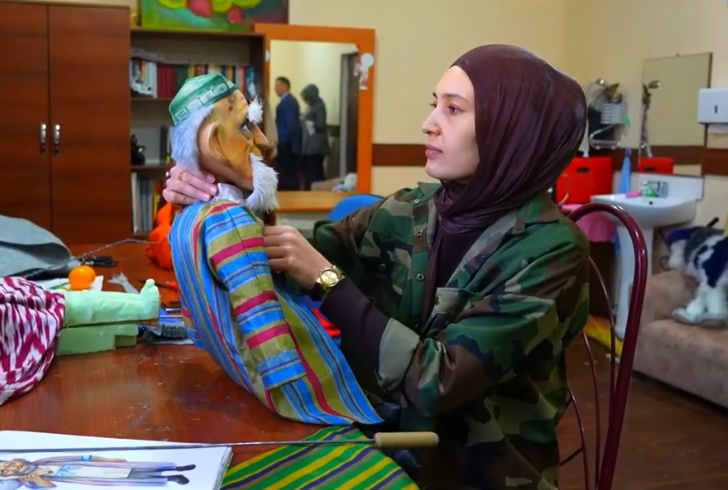
YouTube | euronews | Hand-crafted stagecraft transforms imagination into a tangible, honest reality for the audience.
Each production begins long before opening night. Workshops inside the theatre build entire worlds by hand.
Set designer Svetlana Kolesnikova defines the process clearly:
“You feel like a magician. We create a fairy tale and give it to our viewers. You cannot deceive an audience, especially children. Everything must feel real, even in a fantasy world.”
Carpenters, painters, and prop-makers collaborate for months. Every prop, backdrop, and costume undergoes careful detailing. Kolesnikova emphasizes that authenticity determines success.
“When you put your heart into what you create, it comes alive on stage. That is the miracle of theatre.”
The Center of Opera and Ballet
As audiences mature, many eventually enter one of Central Asia’s most iconic venues, the Alisher Navoi State Academic Bolshoi Theatre. Built in the 1940s, the theatre remains the leading opera and ballet institution in Uzbekistan. Full seasons feature classical productions alongside international collaborations.
The building itself reflects artistic precision. Museum supervisor Yuliya Seryakova explains that architect Alexey Shchusev envisioned the theatre as a “temple of art,” where architectural detail would guide visitors toward aesthetic awareness.
Tashkent craftsmen created carved wooden panels inspired by Uzbek interior traditions. Even after renovations and the 1966 earthquake, these works were preserved with care. According to Seryakova, they remain a cultural treasure.
Architectural Details That Tell a Story
Black marble handrails crafted from rare stone discovered by master brothers Jalol and Balta Juraev in a remote quarry. The marble was cut manually and transported to Tashkent.
The Bukhara Hall, where mirrored carved panels reflect sunlight across the room, creating natural illumination. Distinct interior designs in each hall, ensuring no two spaces feel identical.
“For decades, visitors have touched these railings without knowing their history,” Seryakova notes.
Recent seasons have also seen more productions performed in the composer’s original language. The trend reflects growing international connections and a wider audience interested in authentic performances.
Theatre in the Digital Era
Streaming platforms dominate much of today’s entertainment industry. Even so, theatre continues to attract loyal audiences. A veteran theatre professional explains the difference:
“A person must feel live conversation. Every performance is born anew. Artists cannot repeat the same show twice. That is why theatre remains valuable.”
Each performance develops its own rhythm. Timing shifts slightly, audience reactions vary, and actors respond to the atmosphere in the room. That unpredictability defines live theatre.
Beyond the stage lights, many people contribute quietly to each show. Costume designers, lighting specialists, decorators, and technical staff handle crucial tasks out of public view. Their work keeps every production running. As the veteran points out, applause rarely reaches them, yet the performance would not exist without their contribution.
Musical Theatre and National Stories
Near the Navoi Theatre stands the Uzbek State Musical Theatre named after Mukimi, the only dedicated musical theatre in Central Asia. The institution maintains its own orchestra, ballet ensemble, choir, and soloists.
Press secretary Feruza Holiqova highlights the theatre’s steady audience growth and its annual premieres. Each season introduces new productions that reflect social themes and local narratives.
Actor Mehmonali Salimov, who has performed on its stage for nearly five decades, describes the bond between performers and spectators:
“Uzbek audiences see reflections of their own lives in our characters. That connection keeps performances alive year after year.”
The theatre blends music, drama, and dance into productions that remain accessible to a wide audience.
Regional Theatre Beyond Tashkent
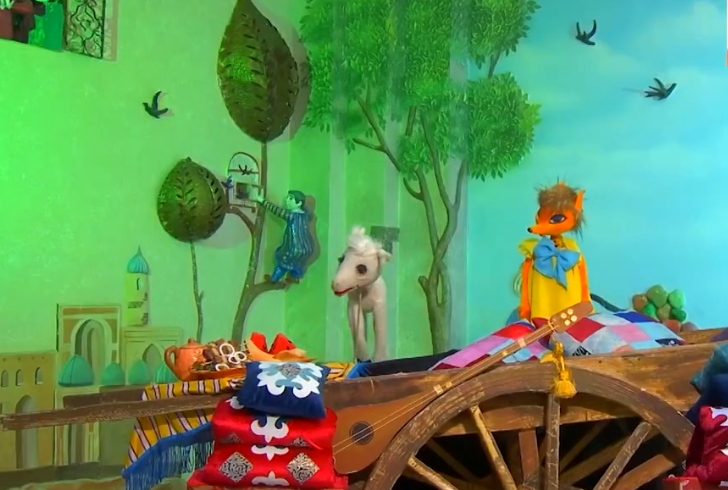
YouTube | euronews | From puppet shows to grand operas, Uzbekistan’s nightly performances keep the live arts thriving.
Theatre culture extends far beyond the capital. In Samarkand, the Samarkand Regional Musical Drama Theatre opened in 1914 with the production “Padarkush” by Mahmudkhoja Behbudiy. The play marked a turning point in modern Uzbek theatre history.
Botir Tugalov, Head of the regional Department of Culture, confirms that four state theatres operate in the Samarkand region alone, contributing to the nationwide total of 41.
Theatre programming today often highlights historical plays, contemporary comedies, collaborations with foreign directors, and touring productions. Regional theatres increasingly participate in international exchanges while continuing to emphasize local stories and languages.
The Continuing Role of Live Performance
Throughout Uzbekistan, theatre continues to flourish across many types of stages. Puppet theatres, opera houses, and regional drama venues host performances regularly. As night falls, audiences gather to watch live stories unfold.
Craftsmanship defines the production process. Historic theatre interiors feature intricate architectural elements, while stage crews design and paint props by hand. Live theatre offers something unique: a performance that evolves in response to the moment. Actors adjust their timing to audience reactions, musicians respond to changes in rhythm, and technicians manage lighting and sound cues.
Uzbekistan’s theatre system blends heritage with innovation. Historic venues protect artistic traditions, while contemporary productions introduce modern staging and international collaboration. Puppetry introduces younger audiences to theatre, while adults return for opera, ballet, drama, and musicals.
With 41 state theatres across the country, theatre remains an important cultural tradition.