The Untold Story of Bay Area Skate Culture
Friday nights in the 1980s often led straight to the roller rink. The lights were low, the speakers pushed out heavy bass, and the floor moved with a constant swirl of wheels. Across the country—especially around California’s Bay Area—families treated skating like a weekly ritual. What many people still overlook, though, is where the culture truly came from. The style, rhythm, and attitude that shaped American roller skating were built inside Black communities.
In cities such as Oakland, San Francisco, San Jose, and Hayward, skating quickly grew beyond a simple pastime. For many, it became a form of identity and expression, a way to preserve culture while gliding across polished wood.
How “Soul Night” Began
Roller skating culture did not begin in open, welcoming spaces. It developed in spite of limitations.
In the 1950s, many rinks across the United States allowed Black skaters through the doors only one night a week. The evening was bluntly labeled “Black Night.” By the 1960s, some locations tried to soften the language, renaming it “Martin Luther King Night” or “Soul Night.”
Across the Bay Area, rink owners often posted rules that indirectly targeted Black patrons. Dress codes and behavioral policies created additional barriers.
Despite those conditions, the community developed its own distinct skating style. Skaters refined detailed footwork, practiced coordinated routines with friends, and brought call-and-response energy to the rink floor. The music guided every movement, giving rise to rhythm skating.
Skating offered more than entertainment. For many participants, it carried a sense of pride and belonging.
The Pioneer Behind the Movement
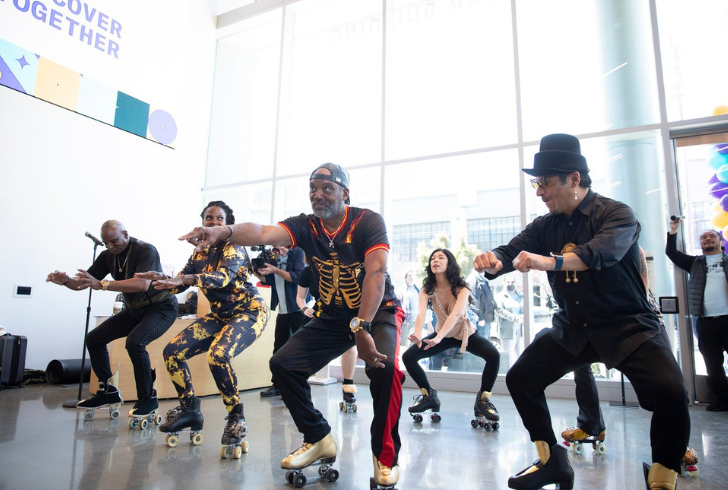
Instagram | hjkcenterforarts | Richard Humphrey founded the Golden Rollers, shaping the Bay Area’s roller dance history.
Few names carry as much weight in Bay Area skate history as Richard Humphrey. Founder of the Golden Rollers and creator of the Roller Dance Academy, Humphrey helped shape what many now recognize as roller dance.
He began skating in 1957 and became deeply committed by the early 1970s. From 1979 to 1988, he performed every Sunday at Golden Gate Park as part of the Golden Rollers, a trio of quad skaters known for polished choreography and precision timing.
Humphrey experienced rink discrimination firsthand. Posted rule boards often made it clear who was being watched. He recalled walking into rinks filled with signs outlining dress codes and behavior policies that felt personal. The message was subtle but unmistakable.
Yet he kept skating.
He later coined the term “roller dance” to describe the choreographed style he and others developed—structured footwork layered with musical interpretation. In 1996, long before social media amplified skating trends, he formalized the style through roller dance workouts and training programs. The term stuck.
Today, roller dance remains a recognized form of quad skating across the globe.
Passing the Craft to the Next Generation
Bay Area skate culture thrives because it moves through mentorship.
Takiyah Franklin began skating at Valley Vista rink in Hayward as a child. What started as a hobby grew into disciplined training under Richard Humphrey. The connection came through her father’s friendship with the skating pioneer.
Franklin views skating as both joy and responsibility. Training under Humphrey carries historical awareness. The steps on the floor today exist because earlier generations fought for time and space in segregated rinks.
She explains that skating requires strong balance control, steady core stability, focused posture, and precise musical timing to move smoothly and stay in rhythm.
Quad skates distribute weight differently than inline skates. The wider base allows intricate footwork, yet it requires precise body alignment. Skaters must center their weight, lock their posture, and stay rhythm-driven. Technique creates freedom.
Isaac Farfan and the Revival Era
Another key figure sustaining Bay Area skate culture is Isaac Farfan, a second-generation San Jose native.
Farfan rediscovered skating in 2007 after stepping away from it during childhood. In November 2019, just before quad skating surged in popularity during the pandemic, he enrolled in the Roller Dance Academy. A former hairdresser, he transitioned into skate instruction, carrying forward the “Sunday school” style lessons taught by Humphrey.
He identifies as a roller dancer first. The title reflects structure, choreography, and musicality rather than casual rink skating. Through instruction, he continues the Bay Area’s distinct approach—smooth transitions, controlled spins, coordinated group sets.
From Local Rinks to Global Stages
The cultural reach of Bay Area roller dance now extends far beyond California.
Humphrey’s work has reached far beyond local rinks. He has choreographed routines for Olympic gold medalist Kristi Yamaguchi, merging the rhythm of roller dance with the precision expected from elite athletes. He has also shared the floor with Usher, who brought roller skating to one of the biggest stages in entertainment during the halftime show at Super Bowl LVIII. When Usher and his dancers glided across the field on skates, the stadium briefly transformed into something closer to a modern roller disco.
For many longtime skaters, that performance felt familiar. The style seen on television had been developing for decades in neighborhood rinks, outdoor parks, and late-night community sessions.
The Technical Side of Soul Skating
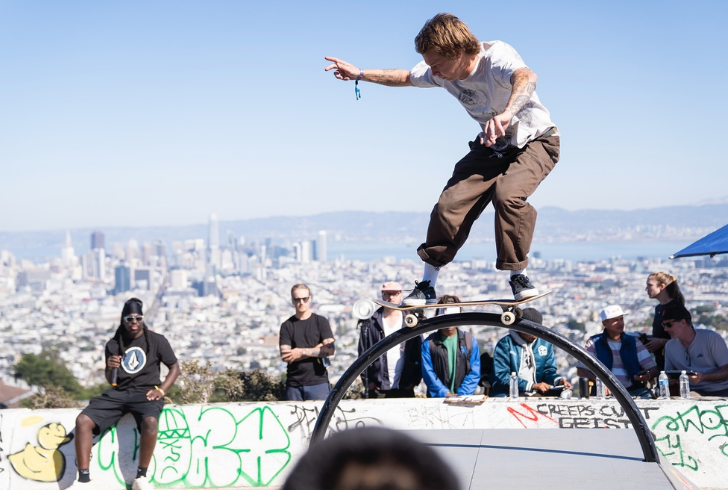
Instagram | sfchronicle | Generations of Bay Area skaters keep the culture alive through classes, open sessions, and group choreography.
Roller dance sits at the intersection of technical control and creative freedom.
Quad skates allow movement in several directions at once. Their wider wheelbase gives skaters stability for pivots, side glides, and tight turns. Much of the control comes from shifting weight between the front and rear trucks while keeping the upper body steady. Every sequence follows the timing of the music.
Technique centers on edge control. Smooth transitions rely on careful pressure along the wheels. Knees remain slightly bent to absorb motion, while a stable core anchors the body’s balance.
With those mechanics in place, expression becomes possible. What appears effortless on the surface rests on a disciplined technical base.
A Culture That Keeps Rolling
Throughout the Bay Area, roller skating continues to connect generations. Rinks and outdoor spaces host community sessions where longtime skaters share the floor with newcomers. Classes introduce beginners to the fundamentals while experienced crews rehearse synchronized choreography.
“Soul Night” no longer operates under the barriers that once defined it, yet the cultural spirit of those gatherings still shapes the atmosphere.
Today, skating carries history as well as movement. From segregated rink schedules in the mid-20th century to the spectacle of Super Bowl LVIII, the culture has continued moving forward.
Leaders such as Richard Humphrey, Takiyah Franklin, and Isaac Farfan remain central to passing down that tradition.